


Can Termites Cause Structural Failure?
Need Same Day Service? We Can Help.
Call Us Now at 714-992-1292.
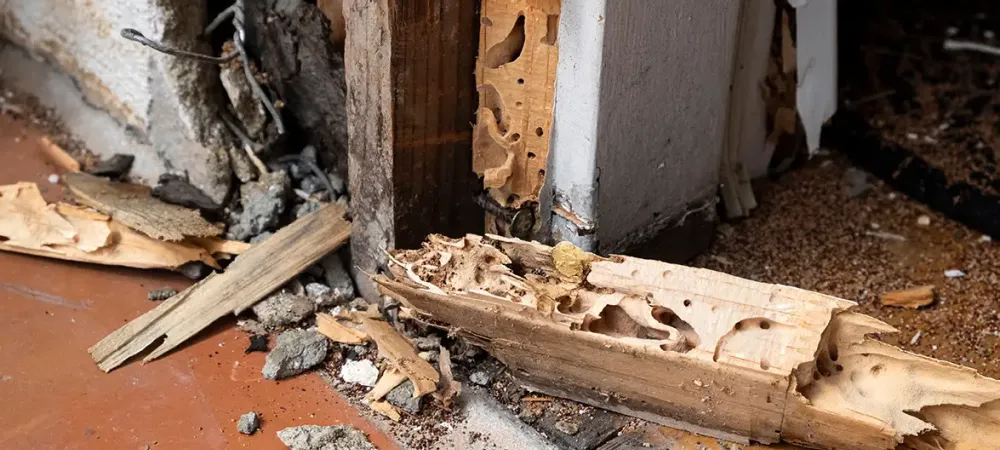
Termites are silent invaders that can wreak havoc on your home before you even notice a problem. They feed on wood and other cellulose-based materials, gradually weakening structural supports and causing damage that can become dangerous over time. Left untreated, termite infestations can compromise the integrity of walls, floors, and foundations, leading to costly repairs or even structural failure.
Understanding how termites operate, recognizing the signs of damage, and taking early action are key to protecting your home.
How Termites Damage Wood and Structural Supports
Termites consume wood as their primary food source, and they do it in ways that are hard to detect. Over time, this feeding can hollow out beams, joists, and framing, significantly weakening the structure of your home. Here's how this differs between subterranean termites and drywood termites:
Subterranean Termites
Subterranean termites live in soil and build tunnels to reach your home. They are the most destructive type of termite because they attack wood that supports the structure of the house, including:
- Foundation beams and posts
- Floor joists and subfloors
- Load-bearing walls
- Decks and exterior wooden structures
They stay mostly hidden within walls or under the floor, so homeowners often do not notice the damage until it is severe. Subterranean termites are highly social and work in large colonies, which accelerates the rate of destruction.
Drywood Termites
Drywood termites do not require contact with soil and typically infest wood above ground, including framing, furniture, and trim. Their colonies are smaller but can still cause significant damage over time. Drywood termite damage is often harder to spot because:
- They live entirely inside the wood they consume
- Infestations can go undetected for years
- They leave behind small droppings called frass near entry points
Drywood termites can compromise structural components as well as cosmetic elements of your home, making early detection essential.
Signs Termite Damage May Already Be Compromising Your Home
Termite damage is rarely visible immediately. Some common signs that damage may already be affecting your home include:
- Hollow-sounding wood when tapped
- Sagging or uneven floors
- Cracked, bubbled, or peeling paint
- Mud tubes along walls or foundations
- Small piles of frass near wooden surfaces
Recognizing these warning signs early can prevent damage from progressing to the point of structural compromise.
When Termite Damage Can Lead to Structural Failure
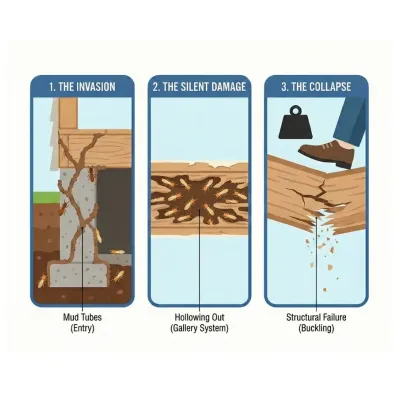
Structural failure occurs when the wood supporting your home is weakened enough that it cannot safely bear weight. Factors that increase this risk include:
- Long-term untreated infestations
- Infestations in load-bearing walls or floor joists
- Older homes or properties with previous water damage
- High moisture areas that accelerate termite activity
Even small infestations can grow into serious problems if not addressed. Damage may progress silently until signs become severe, which is why proactive inspections are critical.
How Homeowners Can Protect Their Property
Protecting your home from termite damage requires early detection, preventive measures, and ongoing monitoring. Homeowners can take steps such as:
- Scheduling regular professional termite inspections
- Eliminating wood-to-soil contact around foundations
- Addressing moisture problems in crawl spaces, basements, and attics
- Using treated wood or termite barriers in vulnerable areas
- Keeping firewood, debris, and stored wood away from the home
These strategies reduce the risk of infestation and minimize potential structural damage.
How the bugman Can Help
At the bugman, we help homeowners identify termite activity before it becomes a serious problem. Our professional inspections uncover hidden damage and detect signs of active infestations. We create customized treatment plans to eliminate termites and protect structural components, including preventive measures to stop future infestations. By acting early, we help protect your home, your investment, and your peace of mind.
Termites aren't the only pest that can cause severe damage to your home. Learn more about the damage other pests cause in your home.
Frequently Asked Questions
What is the difference between subterranean and drywood termites?
Subterranean termites live in the soil and tunnel into homes, often attacking foundational wood and load-bearing structures. Drywood termites live entirely inside above-ground wood and can infest furniture, trim, and framing. Both types can cause significant damage, but subterranean colonies tend to spread faster.
Are older homes more susceptible to termite damage?
Yes. Older homes often have untreated wood, previous water damage, or less effective barriers, making them more vulnerable to infestations. Regular inspections are especially important in these properties.
Can professional pest control repair termite damage?
Professional pest control can remove termites, prevent future infestations, and advise on preventive measures. Structural repairs usually require contractors, but pest professionals can help identify damaged areas and document infestations for insurance or repair purposes.
Can termites infest furniture or non-structural wood?
Yes. Drywood termites, in particular, can infest furniture, wooden trim, and decorative wood elements. Damage may go unnoticed for years, so careful monitoring is important.
What areas of a home are most at risk for termite infestations?
Load-bearing walls, floor joists, subfloors, decks, and any wood in contact with soil or exposed to moisture are most vulnerable. Crawl spaces, basements, and attics also provide conditions favorable for termites.