


Can Rodents Cause House Fires?
Need Same Day Service? We Can Help.
Call Us Now at 714-992-1292.
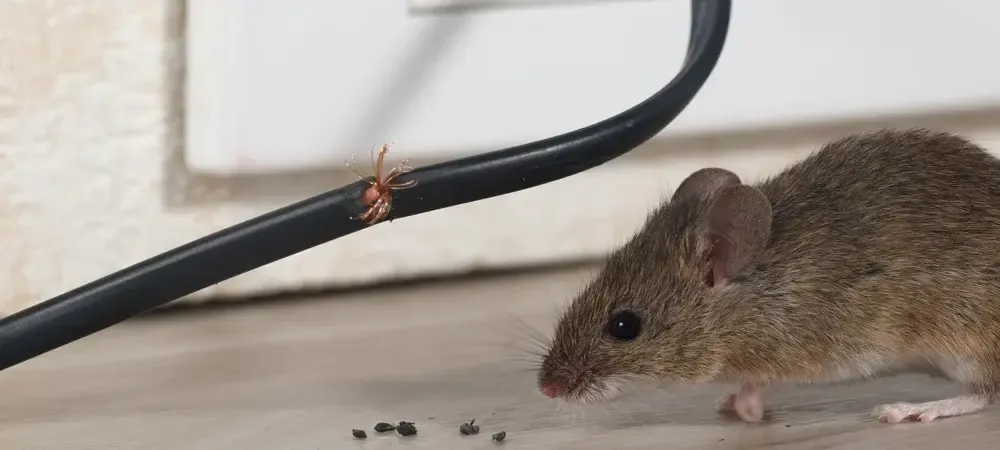
Most homeowners think of rodents as a nuisance problem, not a safety risk. However, rats and mice are a well-documented cause of residential fires. Their natural behaviors, especially chewing and nesting, can quietly create serious fire hazards inside homes.
Rodent-related fire risks often go unnoticed because the damage happens inside walls, attics, and other hidden spaces. By the time warning signs appear, conditions may already be dangerous.
How Rodents Create Fire Hazards in the Home
Rodents are constantly chewing to keep their teeth from overgrowing. Electrical wiring is a common target because it is accessible, warm, and often hidden behind walls or insulation.
As rodents move through a home, they also build nests in protected areas near heat sources and electrical components. These behaviors combine to increase the likelihood of electrical failure, overheating, and fire. Modern homes with extensive wiring, insulation, and enclosed spaces can be especially vulnerable to rodent activity.
How Does Chewed Wiring Lead to House Fires?
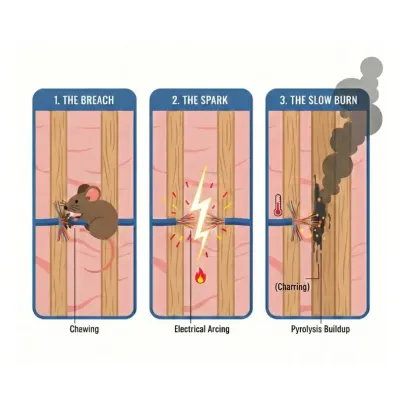
Chewing damage to electrical wiring is one of the most dangerous consequences of a rodent infestation. Here's why:
Exposed Wires and Electrical Arcing
When rodents chew through the protective insulation around wires, the metal conductor becomes exposed. This can lead to electrical arcing, where electricity jumps between exposed areas.
Electrical arcing creates intense heat and sparks that can ignite nearby materials such as wood framing, insulation, or nesting debris. Because this often occurs inside walls, fires can start and spread before being detected.
Overloaded Circuits and Shorting
Damaged wiring can disrupt normal electrical flow, causing circuits to short or overload. This may result in excessive heat buildup in outlets, junction boxes, and breaker panels.
Over time, repeated overheating weakens electrical components and increases the risk of ignition, especially in older wiring systems.
Other Ways Rodents Increase Fire Risk
Rodents contribute to fire hazards in ways beyond chewing wires.
Nesting Near Heat Sources
Rats and mice are drawn to warm, sheltered areas where they can build nests. Common locations include:
- Behind refrigerators, stoves, and dryers
- Inside furnaces and HVAC systems
- Near water heaters and electrical panels
- In attics above ceiling lights
Nesting near these heat-producing appliances increases the risk of materials overheating or catching fire.
Flammable Nesting Materials
Rodent nests are often made from highly flammable materials such as paper, fabric, cardboard, and insulation. When these materials are placed near electrical components or heat sources, they can ignite quickly and help fires spread faster.
Which Areas of the Home Are Most at Risk?
High-risk areas include attics, crawl spaces, garages, wall voids, and behind major appliances. Some areas of the home are more vulnerable to rodent-related fire hazards due to limited visibility and frequent electrical activity. These spaces allow rodents to move undetected while exposing wiring and equipment to damage.
Warning Signs Rodents May Be Creating a Fire Hazard
Recognizing early warning signs can help prevent dangerous situations. Indicators that rodents may be creating a fire risk include:
- Scratching or gnawing sounds inside walls or ceilings
- Flickering lights or unexplained power interruptions
- Frequently tripped circuit breakers
- Burning smells with no obvious source
- Visible droppings, nesting material, or chewed items
Any combination of these signs should be taken seriously.
Protecting Your Home From Rodent-Related Fires
Preventing rodent-related fires requires more than removing the animals themselves. It involves addressing damage, entry points, and conditions that allow rodents to return.
Professional inspections can identify hidden wiring damage and nesting activity in high-risk areas. Sealing entry points and monitoring vulnerable spaces helps reduce the likelihood of future infestations and ongoing fire hazards.
When to Call a Professional Immediately
Frequently Asked Questions
Are certain types of homes more at risk for rodent-related fires?
Homes with older wiring, hidden wall voids, attics, or extensive insulation are especially vulnerable. Rodents can move undetected in these areas while chewing wiring or building nests near heat sources.
Can mice or rats really start a fire in my home?
Yes. While it is rare, rodents can cause fires by chewing on electrical wiring or building nests near heat sources. Even a single short circuit or spark can ignite flammable materials like insulation or paper.
Is rodent-related fire damage covered by homeowners insurance?
Coverage varies by policy. Some insurance policies cover fire damage caused by rodents, while others may not if the infestation was long-standing or neglected. It’s important to document any signs of infestation and consult your insurance provider.
Should I try to remove rodents myself if I suspect electrical damage?
DIY removal is not recommended when wiring is involved. Rodents can create hidden hazards inside walls or ceilings, and tampering with electrical damage without professional expertise could worsen the risk.